
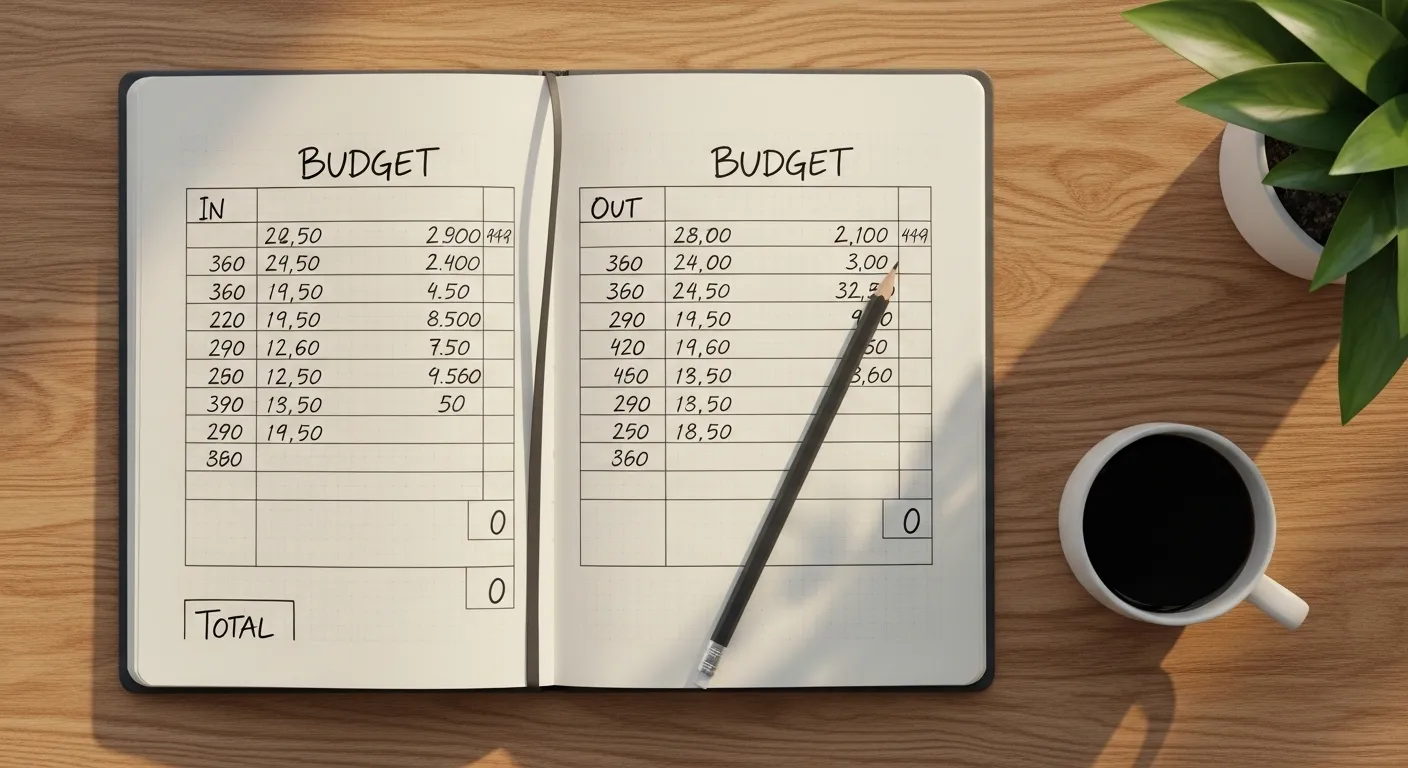
A zero-based budget starts with a simple premise: your income minus your expenses should equal exactly zero. Not because you spend everything, but because every single dollar has a deliberate destination — bills, groceries, savings, debt repayment, or even fun money. Nothing leaks.
This is not about restriction. It is about intention. When you tell every dollar where to go before the month starts, you stop wondering where your money went after it has already left.
Step 1: Start With Your True Monthly Income
Open SpendScribe and create a new budget period. Enter your after-tax take-home income — the number that lands in your bank account. If you are salaried, this is consistent. If you are freelance, use your lowest month from the past three as your baseline. Always budget conservatively.
Step 2: List Every Expense Category
Work through your expenses in priority order. Start with fixed non-negotiables: rent or mortgage, utilities, insurance, minimum debt payments. Then move to variable essentials: groceries, fuel, phone. Finally, discretionary items: dining out, subscriptions, entertainment, clothing.
- Fixed: rent, mortgage, car payment, insurance, internet, phone
- Variable essentials: groceries, petrol, medications, household items
- Savings targets: emergency fund, retirement contribution, sinking funds
- Debt repayment: any amount above the minimum you can throw at debt
- Discretionary: dining, streaming, hobbies, personal care, gifts
Step 3: Assign Every Dollar Until You Hit Zero
Add up all your category allocations. Subtract from your income. If the result is positive, you have unallocated dollars — assign them somewhere before the month starts, even if that means boosting a savings category. If the result is negative, trim discretionary categories until you reach zero.
Step 4: Log Expenses Against Categories As You Spend
This is where SpendScribe does its job. Every time you spend, log it against the matching category. The manual act of entering it reinforces awareness. Check your category balances every few days — not to stress, but to stay informed. Catching a category running hot on the 10th gives you 20 days to adjust.
Step 5: The 30-Minute Monthly Reset
On the last day of each month, review every category. Which ones came in under? Which went over? Carry nothing forward — start fresh with a new zero-based plan for the next month. Tweak allocations based on what you learned. Over three months, your budget becomes highly accurate to your real life.
Common Zero-Based Budget Mistakes
- Forgetting irregular expenses: car registration, annual subscriptions, birthday gifts — create sinking funds for these
- Budgeting net income but forgetting to account for taxes if self-employed
- Setting discretionary allowances so tight that you blow the budget within a week — realistic beats perfect
- Not logging expenses daily — batch-entering a week later means you are guessing, not tracking
Zero-based budgeting is the most powerful budgeting method available because it forces a monthly conversation with your own priorities. It is not a spreadsheet exercise — it is a clarity exercise. Once you have done it for three months, you will never go back to guessing.