
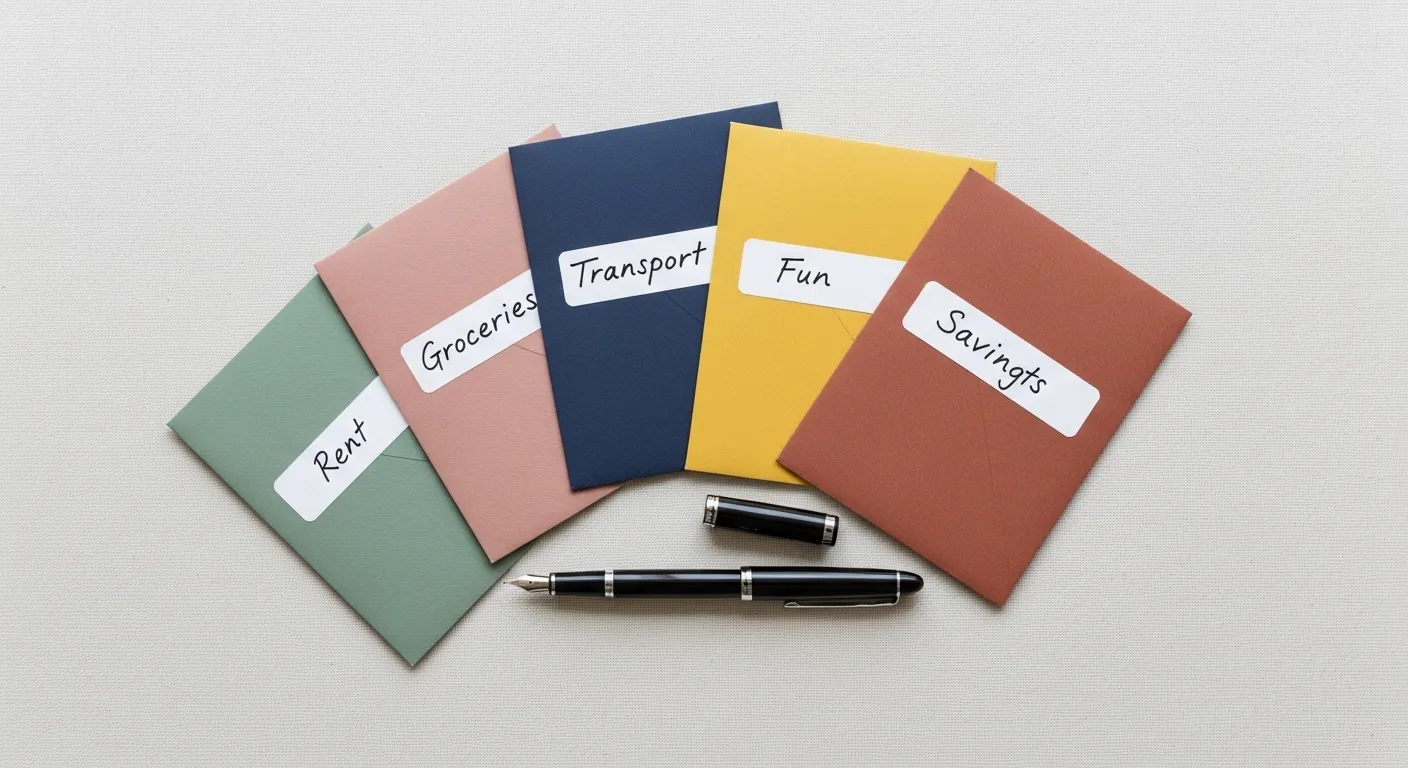
The envelope budgeting method is older than credit cards. You take your paycheck in cash, split it into labelled envelopes — one for groceries, one for rent, one for fuel — and when an envelope is empty, spending in that category stops. Simple. Effective. Proven.
The problem: carrying cash and physical envelopes in 2026 is impractical. But the system's core logic — pre-allocating money to categories before you spend it — is timeless. Here is how to replicate it digitally without connecting a bank account.
How Digital Envelope Budgeting Works
Instead of physical envelopes, you create budget categories with a fixed monthly cap. At the start of each month you 'fill' each category based on your income. As you spend, you log expenses against the relevant category. When the balance hits zero, you stop — or you consciously decide to borrow from another envelope.
Step 1: List Your Spending Categories
Start with 6–10 categories. Fewer is better. Common ones include: Housing, Groceries, Transport, Dining Out, Entertainment, Health, Personal Care, Clothing, Savings, Miscellaneous.
Step 2: Assign a Monthly Cap to Each Category
Base your caps on the last 2–3 months of actual spending, not wishful thinking. If you regularly spend $400 on groceries, budgeting $200 will not work — it will just make you feel guilty. Set realistic caps, then tighten gradually each month.
Step 3: Log Every Expense Immediately
The envelope method only works if you log expenses as they happen — or within the same day. Delayed logging leads to 'I think I spent around...' which defeats the system. Keep SpendScribe open on your phone. Log purchases while waiting for your card to process.
Step 4: Check Your Balances Mid-Month
On the 15th of each month, check every category balance. This mid-point review is what separates people who finish the month on budget from those who do not. If Dining Out is already 80% spent, you know to cook at home for the rest of the month.
What to Do When an Envelope Runs Out
You have two options: stop spending in that category, or transfer the shortfall from a lower-priority envelope. The key is to make it a conscious decision, not a silent overspend that you discover at month end. Log the transfer and note why it happened.
The Biggest Advantages Over App-Based Auto-Syncing
- You see every transaction because you enter it — no automatic imports that you never review
- The friction of manual entry makes you think twice before spending
- No bank credentials are ever shared with a third party
- Works for cash, card, and online purchases equally
The envelope method is not about deprivation. It is about intention. When you decide upfront how much each category gets, you stop making a hundred small spending decisions and make one big intentional one instead.