
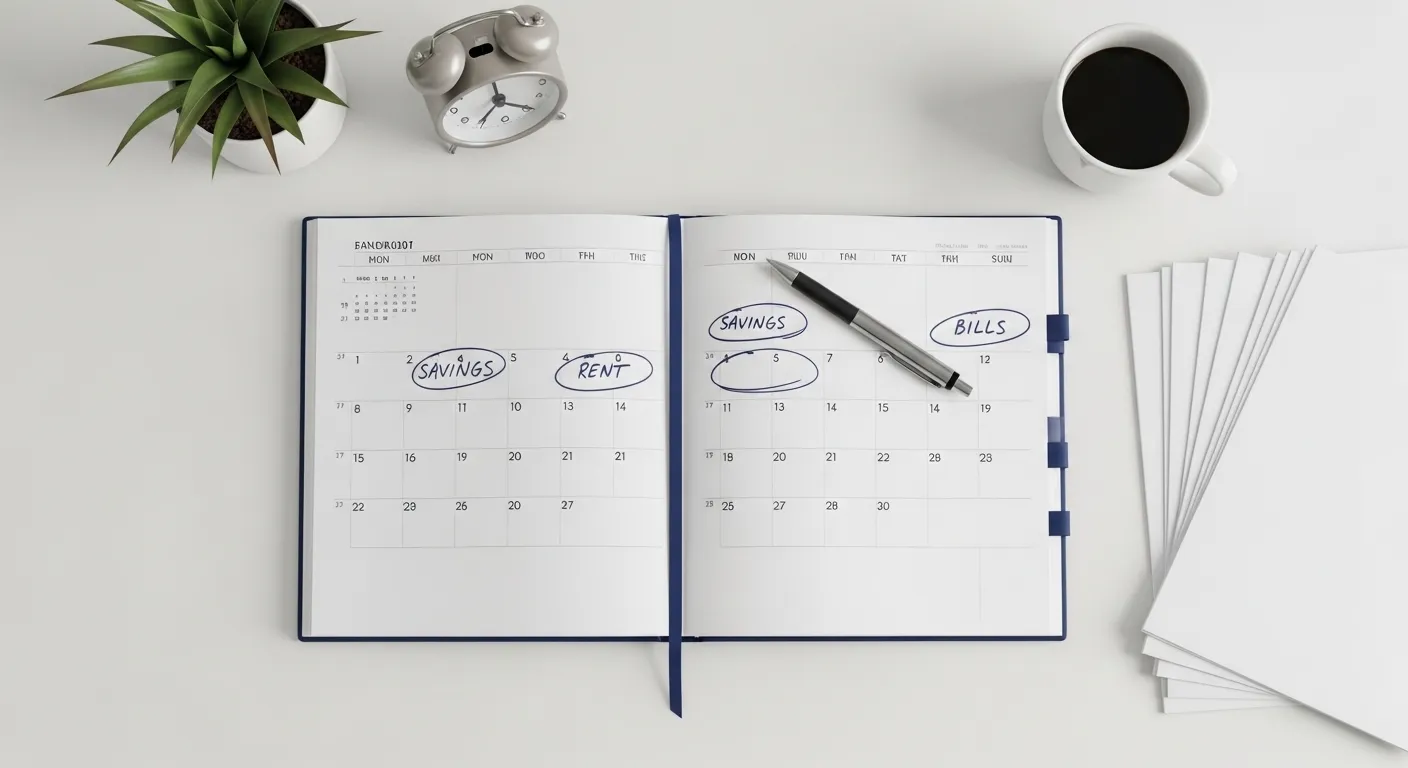
Automation is the most underused tool in personal finance. Most people know they should save more and pay bills on time — but they rely on willpower and memory to make it happen. Willpower is finite. Memory fails. Automation does not.
You can build a cash flow system that moves money to the right places the moment your paycheck lands — before you have a chance to spend it on something else. Here is how to set it up in under an hour.
The Core Principle: Pay Yourself First, Automate Everything Else
The single most effective financial habit is saving before you spend, not after. When savings comes out of your account the same day your paycheck arrives, you never see it as available money. You adjust your lifestyle to what remains. This is not deprivation — it is engineering.
Step 1: Map Your Fixed Outflows
Open SpendScribe and list every recurring payment with its due date and amount: rent, mortgage, car insurance, phone, utilities, streaming subscriptions. Group the ones that fall in the first half of the month and the second half. This is your cash flow calendar.
Step 2: Set Up Automated Savings Transfers
Log in to your bank and create automatic transfers for payday — ideally the same day you are paid. Set up transfers for:
- Emergency fund: target 3–6 months of expenses, automate a fixed amount monthly until you hit it
- Retirement / pension contribution: if your employer matches, contribute at least enough to capture the full match
- Sinking funds: annual car registration, travel fund, Christmas gifts, home maintenance — divide the annual cost by 12 and automate that amount monthly
Step 3: Schedule Bill Payments Two Days Early
Late fees are the most pointless expense in a budget. Set every bill payment to process two days before its due date — not on the due date. This buffer covers weekends, bank processing delays, and the occasional brain fog. Two days early means you never pay a late fee again.
Step 4: Log Automated Transactions in SpendScribe
Automation does not mean ignorance. Each time a recurring payment processes, log it in SpendScribe. This takes 10 seconds and keeps your budget current. If you only log it at month end, you lose the mid-month visibility that prevents overspending. Set a weekly reminder to log any automated transactions from the past seven days.
Step 5: Build a Small Buffer in Your Checking Account
Keep a permanent float of one to two weeks of expenses in your main account at all times. This is not savings — it is an operational buffer. It prevents overdrafts when the timing of automated payments and income deposits misalign by a day or two.
Review Quarterly, Not Monthly
Once your automation is running, you do not need to touch it every month. Schedule a quarterly review: check that all bill amounts are still correct, adjust savings rates if income has changed, and add or remove any subscriptions. The system runs itself in between.
"Simple automation beats heroic willpower every time. Build the system once, then let it work."
An automated cash flow system is not passive. It is proactively designed. You spend one hour now so that you never have to scramble at the end of a month again. That is one of the best returns on time available in personal finance.